Sovereignty Belongs to Those Who Can Act

Imagine Europe had pulled it off. World-class language models of its own, data centers from Lisbon to Helsinki, every byte under European law. The gap in the AI race closed, the fear of permanent dependence put to rest.
.png)
Europe would be sovereign. Would the manufacturers, pharma companies, and city councils using those services be sovereign too? Not yet. Europe does need to catch up, and every step gives these organizations more to choose from. But no amount of catching up relieves them of a job that remains theirs: protecting their own ability to act. Suppose the model provider overhauls its pricing, and a bill that used to be predictable comes back ten times higher. Whether the provider is European, American, or Chinese makes no difference. The question is the same: What's the way out?
Sovereign AI is the ability to shape critical dependencies so that an organization remains able to act.
That definition asks both less and more than it might seem. Less, because it does not demand self-sufficiency: an organization can buy nearly everything and still be sovereign, just as it can run everything itself and still not be. More, because shaping is active work: negotiating terms, keeping exits open, knowing the alternatives, and being genuinely able to switch if it ever comes to that. None of it is possible with a dependency you don't know you have. Which leaves the harder question: which dependencies are critical, and how do you spot them?
AI is never more persuasive than in a demo. A model reads 40 years of service records, pulls up the one old case that matches today's fault, and recommends the right repair. For a manufacturer whose most valuable asset lies buried in those documents, this is no party trick. It is the company's own knowledge, searchable at last.
The demo, of course, ran on curated documents, friendly questions, and a tiny workload. Production is another story: the scanned report full of handwriting; the repair suggestion that sounds right, is wrong, and gets expensive; the design data now flowing through somebody else's system. Meanwhile a quieter dependency takes hold. The better the tool works, the deeper it grows into quoting, service, and documentation, until switching providers is no longer a procurement decision. It goes to the core of the business.
None of this is an argument against the tool, and it has nothing to do with where the vendor is based. In marketing, the worst the same language model can do is write a clumsy sentence. Here it determines how quickly service responds and whether design knowledge stays protected, which is to say whether the company keeps its word.
A dependency becomes critical through its consequences for a specific process. How much sovereignty is needed depends on the use case at hand.
The only way to find out is to evaluate the system against your own documents, your own failure cases, and real production volume. But identifying a dependency is not the same as shaping it. How much control a dependency deserves, and what that control may cost, becomes clearest where mistakes are most expensive.
A pharma company lets an AI model answer questions from doctors and pharmacists about its products. It saves money and it works. Then the provider improves the model overnight. For most customers, that's good news. In a validated process, the same upgrade counts as a critical change, and a critical change means one thing: revalidation.
A company can choose between two paths, or anything in between. Run a frozen model in-house, and every decision is yours, but so is every bill: hardware up front, then electricity, system admins, and accountability for as long as the system runs. Take the model from the cloud instead, and you pay per request, at high volume often more than running your own would cost. Then there are the silent costs: the model change nobody caught, or the contract with no exit clause whose terms begin to drift once the process depends on it.
More control has a visible price. Too little control has a hidden one, paid later.
Both answers can be right. Control and economics are separate yardsticks, and only together do they add up to a judgment. For data, for the model, for operations, the balance tips differently every time. That is why there is no such thing as the most sovereign architecture, only one whose full costs the organization understands and is willing to pay. Finding it means answering the question before the provider gets to ask it: What's our way out?
The pharma company can weigh its options because it is big enough to have them. A city council vetting an assistant for citizen services often is not. It has neither the budget nor the staff to run a model of its own, and if only one product on the market meets the requirements for handling personal data, negotiation is an illusion. The provider knows the council's alternatives as well as the council does: there are none.
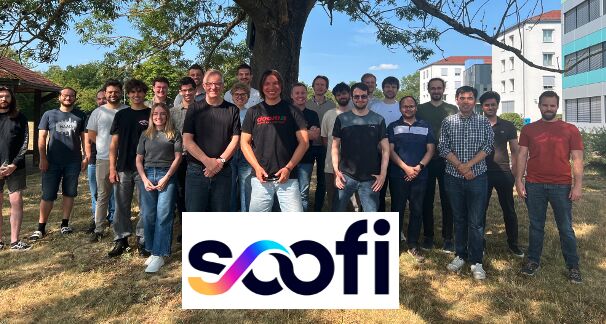
But that is starting to change. With Mistral, Europe now has a maker of capable models of its own, and in late July 2026 the EU opened its call for proposals for up to seven AI gigafactories. Finally, Soofi, a publicly funded language model for German and English, has just been announced (a project Merantix Momentum is directly involved in). It is designed as open source and built for applications and organizations with knowledge worth protecting. Not every option fits every checklist, and Europe is still behind in the big AI race. But a list that was empty for years is filling up. And because smaller, specialized models run on a fraction of the compute, at least one barrier to running your own is coming down.
The real gain is not the switch itself. It is that the dependency on the incumbent stops being quite so critical. A council that has piloted a second option knows its exit and knows the price, and if the terms change later, the damage is contained.
An alternative does not start working the day it is adopted. It starts working the day it becomes credible.
And if Europe never quite gets there? It would be a loss, but the sovereign Europe we imagined was only ever a stage, not a precondition. Standing on that stage would have made no one sovereign by itself, and no organization that knows its critical dependencies, can weigh them, and can change them is helpless without it. The direction is clear enough: evaluate like the manufacturer, weigh like the pharma company, build alternatives like the city council.
An organization's fate does not have to be tied to the outcome of the global AI race. Sovereignty is not a product you can buy off the shelf. It is a capability an organization has to build for itself.
In practice, the road is rarely as straight as in the three scenarios above, and the devil, as usual, is in the details. As an AI transformation partner Merantix Momentum helps organizations build exactly this capability.
Subscribe to the Merantix Momentum Newsletter now.
More articles
%20(1).png)
.png)
.png)
.png)
Sovereignty Belongs to Those Who Can Act
Imagine Europe had pulled it off. World-class language models of its own, data centers from Lisbon to Helsinki, every byte under European law. The gap in the AI race closed, the fear of permanent dependence put to rest.
Europe would be sovereign. Would the manufacturers, pharma companies, and city councils using those services be sovereign too? Not yet. Europe does need to catch up, and every step gives these organizations more to choose from. But no amount of catching up relieves them of a job that remains theirs: protecting their own ability to act. Suppose the model provider overhauls its pricing, and a bill that used to be predictable comes back ten times higher. Whether the provider is European, American, or Chinese makes no difference. The question is the same: What's the way out?
Sovereign AI is the ability to shape critical dependencies so that an organization remains able to act.
That definition asks both less and more than it might seem. Less, because it does not demand self-sufficiency: an organization can buy nearly everything and still be sovereign, just as it can run everything itself and still not be. More, because shaping is active work: negotiating terms, keeping exits open, knowing the alternatives, and being genuinely able to switch if it ever comes to that. None of it is possible with a dependency you don't know you have. Which leaves the harder question: which dependencies are critical, and how do you spot them?
AI is never more persuasive than in a demo. A model reads 40 years of service records, pulls up the one old case that matches today's fault, and recommends the right repair. For a manufacturer whose most valuable asset lies buried in those documents, this is no party trick. It is the company's own knowledge, searchable at last.
The demo, of course, ran on curated documents, friendly questions, and a tiny workload. Production is another story: the scanned report full of handwriting; the repair suggestion that sounds right, is wrong, and gets expensive; the design data now flowing through somebody else's system. Meanwhile a quieter dependency takes hold. The better the tool works, the deeper it grows into quoting, service, and documentation, until switching providers is no longer a procurement decision. It goes to the core of the business.
None of this is an argument against the tool, and it has nothing to do with where the vendor is based. In marketing, the worst the same language model can do is write a clumsy sentence. Here it determines how quickly service responds and whether design knowledge stays protected, which is to say whether the company keeps its word.
A dependency becomes critical through its consequences for a specific process. How much sovereignty is needed depends on the use case at hand.
The only way to find out is to evaluate the system against your own documents, your own failure cases, and real production volume. But identifying a dependency is not the same as shaping it. How much control a dependency deserves, and what that control may cost, becomes clearest where mistakes are most expensive.
A pharma company lets an AI model answer questions from doctors and pharmacists about its products. It saves money and it works. Then the provider improves the model overnight. For most customers, that's good news. In a validated process, the same upgrade counts as a critical change, and a critical change means one thing: revalidation.
A company can choose between two paths, or anything in between. Run a frozen model in-house, and every decision is yours, but so is every bill: hardware up front, then electricity, system admins, and accountability for as long as the system runs. Take the model from the cloud instead, and you pay per request, at high volume often more than running your own would cost. Then there are the silent costs: the model change nobody caught, or the contract with no exit clause whose terms begin to drift once the process depends on it.
More control has a visible price. Too little control has a hidden one, paid later.
Both answers can be right. Control and economics are separate yardsticks, and only together do they add up to a judgment. For data, for the model, for operations, the balance tips differently every time. That is why there is no such thing as the most sovereign architecture, only one whose full costs the organization understands and is willing to pay. Finding it means answering the question before the provider gets to ask it: What's our way out?
The pharma company can weigh its options because it is big enough to have them. A city council vetting an assistant for citizen services often is not. It has neither the budget nor the staff to run a model of its own, and if only one product on the market meets the requirements for handling personal data, negotiation is an illusion. The provider knows the council's alternatives as well as the council does: there are none.
But that is starting to change. With Mistral, Europe now has a maker of capable models of its own, and in late July 2026 the EU opened its call for proposals for up to seven AI gigafactories. Finally, Soofi, a publicly funded language model for German and English, has just been announced (a project Merantix Momentum is directly involved in). It is designed as open source and built for applications and organizations with knowledge worth protecting. Not every option fits every checklist, and Europe is still behind in the big AI race. But a list that was empty for years is filling up. And because smaller, specialized models run on a fraction of the compute, at least one barrier to running your own is coming down.
The real gain is not the switch itself. It is that the dependency on the incumbent stops being quite so critical. A council that has piloted a second option knows its exit and knows the price, and if the terms change later, the damage is contained.
An alternative does not start working the day it is adopted. It starts working the day it becomes credible.
And if Europe never quite gets there? It would be a loss, but the sovereign Europe we imagined was only ever a stage, not a precondition. Standing on that stage would have made no one sovereign by itself, and no organization that knows its critical dependencies, can weigh them, and can change them is helpless without it. The direction is clear enough: evaluate like the manufacturer, weigh like the pharma company, build alternatives like the city council.
An organization's fate does not have to be tied to the outcome of the global AI race. Sovereignty is not a product you can buy off the shelf. It is a capability an organization has to build for itself.
In practice, the road is rarely as straight as in the three scenarios above, and the devil, as usual, is in the details. As an AI transformation partner Merantix Momentum helps organizations build exactly this capability.


.png)

.png)
