The Missing Layer in Enterprise RAG: Knowing When Not to Trust Your AI

The Missing Layer in Enterprise RAG: Knowing When Not to Trust Your AI
How uncertainty estimation empowers RAG pipelines to measure their own doubt and understand their own limitations for true production-grade reliability.
In aviation, an altimeter that is wrong but appears to be working correctly is far more dangerous than one that is obviously broken. A visible failure allows for immediate intervention by the pilot, whereas a plausible error will go unnoticed. For this reason, flight systems are designed to shut down completely rather than display misleading data without warning.
Enterprise Retrieval-Augmented Generation (RAG) systems face the same challenge. Organizations connect large language models to internal knowledge bases with the expectation that the retrieved information is accurate, giving the model greater confidence in its responses. However, a confident response is not necessarily a correct one.
When a RAG system misinterprets data or retrieves incomplete context, there is a high risk of it delivering unsupported conclusions with total confidence. As in the case of aviation, an LLM's ability to recognise its own limitations is just as important as its ability to generate answers. Yet we often find in our engagements that clients are missing this essential feature in their deployed chatbots and RAG applications.
Uncertainty estimation provides that missing safety layer so your pipeline can trigger fallbacks, abstain, or escalate to a human reviewer instead of silently answering hallucinations.

Confidence Is Not Reliability: Understanding Uncertainty in RAG
Confusing confidence with certainty is a fundamental mistake when designing reliable RAG systems. Confidence estimation refers to quantifying how certain a model is about a specific prediction or generated response, reflecting the model’s belief that its answer is correct. Uncertainty estimation, on the other hand, captures the degree of variability, ambiguity, or unpredictability associated with the model’s outputs and provides a broader measure of how much an answer should be trusted.
A key challenge with modern LLMs is that high confidence does not always correspond to correctness: a model may produce a highly certain response even when the retrieved evidence is insufficient or the generated answer is completely hallucinated. This disconnect occurs because LLMs suffer from systematic overconfidence and consistently fail at self-assessment, producing highly confident responses even when they are uncertain [1], [2].
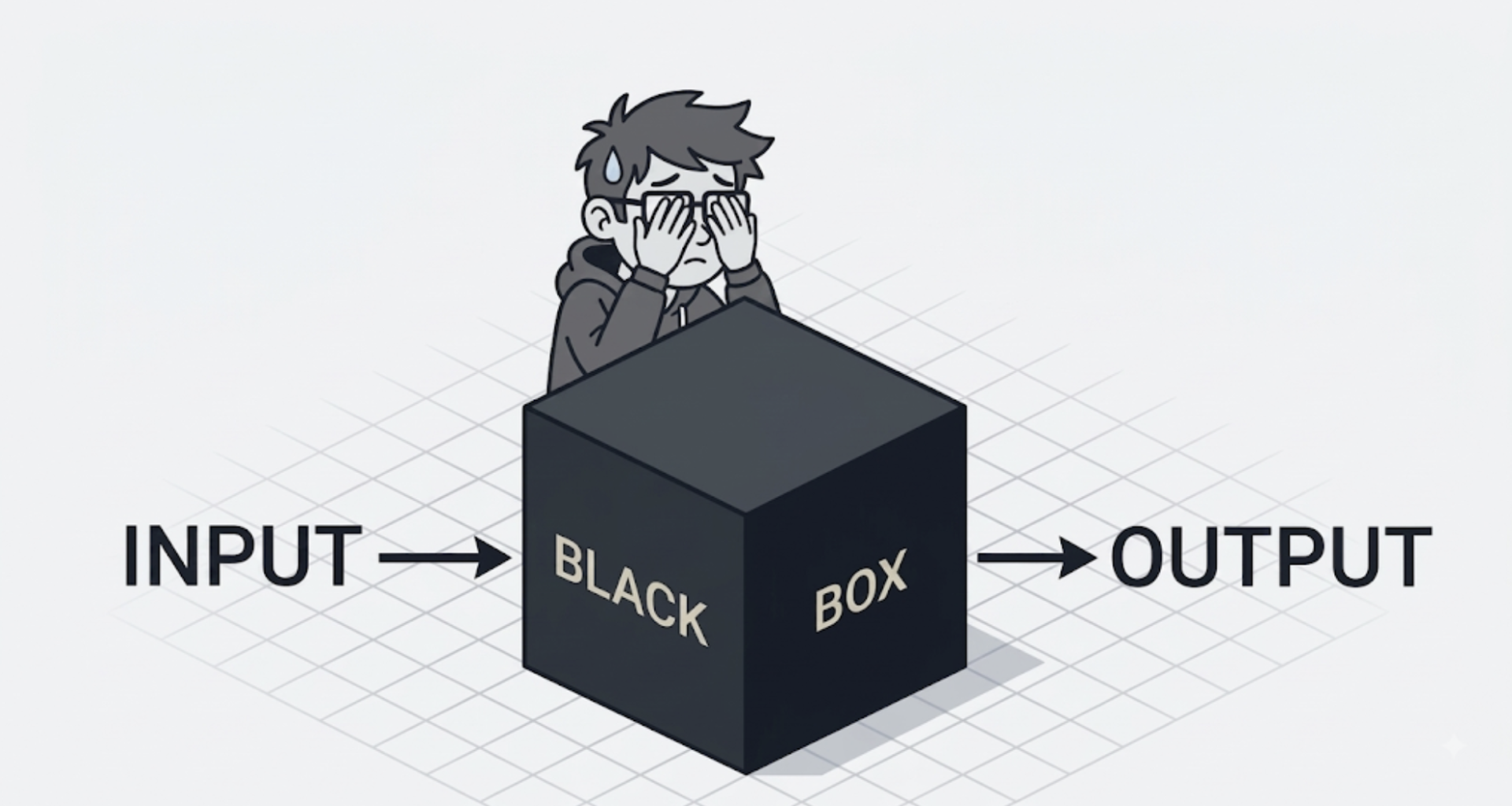
Black-Box Uncertainty: Measuring Uncertainty Without Model Access
Commercial APIs operate as complete black boxes, withholding weights and log-probabilities. Measuring uncertainty in these environments requires evaluating output behavior through empirical stress-testing rather than inspecting model internals.
Consistency-based methods measure output stability across multiple generations. Under standard sampling variance and hardware non-determinism, a grounded model with clear context yields semantically identical outputs, whereas weak context causes generations to diverge wildly. Techniques like Degree Matrix [3], Eccentricity [3], and EigV [3] calculate this "meaningful diversity" across samples to quantify hidden instability.
This same stability concept can be extended across the entire RAG pipeline, where reliability depends on consistency between sub-queries, retrieved context chunks, prompt structures, and intermediate reasoning steps. Perturbation-based methods, with prominent approaches such as R²C [4], take advantage of this by deliberately changing these elements, for example by varying sub-queries, altering intermediate reasoning steps, or prompting the model to reassess its answer, and then observing whether the final answer changes. Rather than relying solely on decoding stochasticity, these methods test whether the answer remains semantically consistent when the pipeline is slightly altered. If a small change leads to a different conclusion, it can be a strong signal that the original answer is unreliable.
While conceptually simple, black-box techniques deliver remarkably strong uncertainty signals in production. The tradeoff is compute cost and latency from issuing multiple API calls per user query. For high-stakes enterprise workflows facing compliance or financial risks, however, that extra compute is a small price to pay for operational safety.
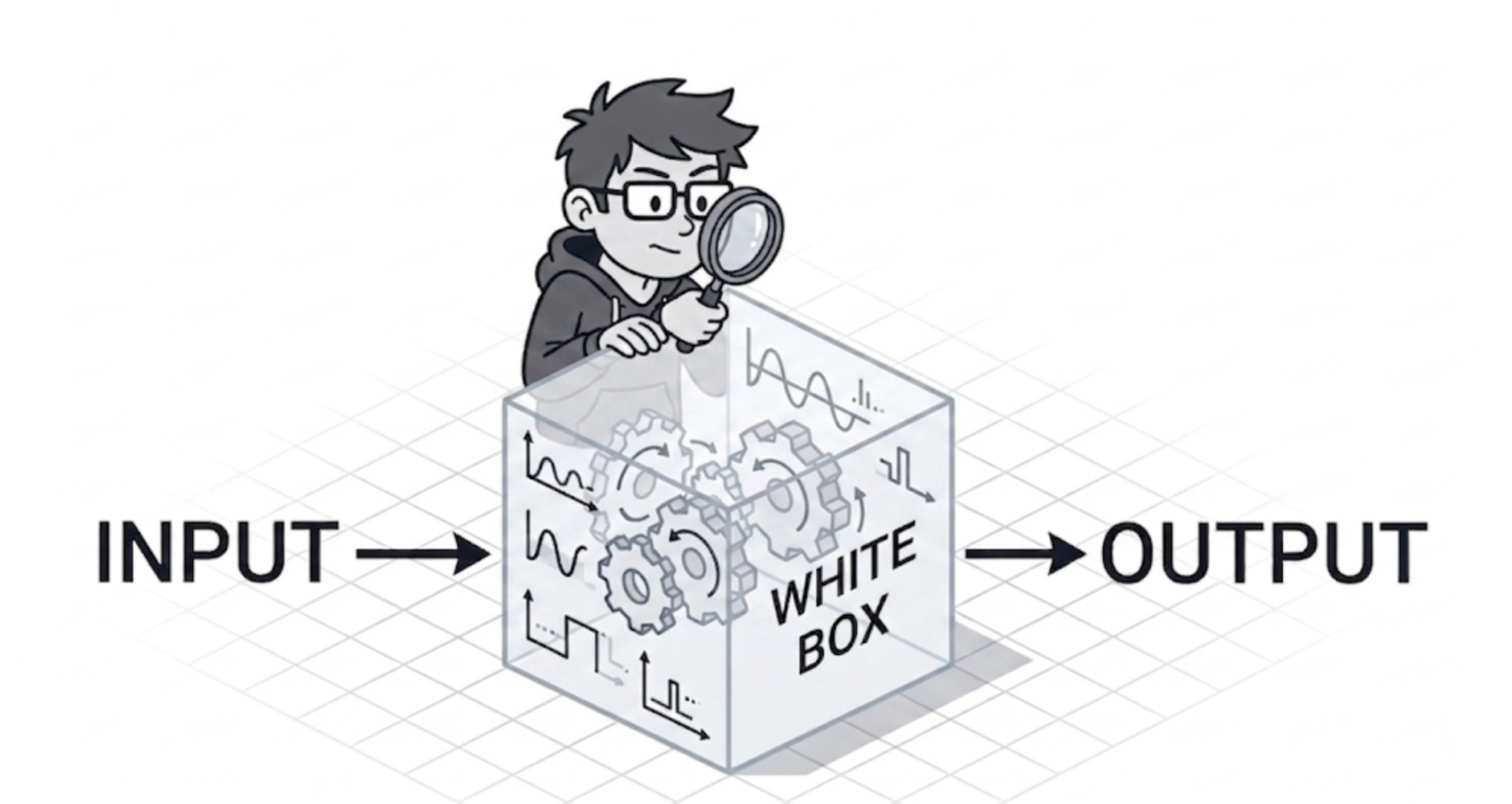
White-Box Estimation: Measuring Uncertainty With Full Model Access
Self-hosting open-source models grants complete access to internal states, token probabilities, hidden representations, and layer-by-layer attention maps. Having full architectural visibility allows you to derive uncertainty signals directly from the model’s internal states and intermediate representations.
- Token-Probability & Likelihood Methods: Some closed-source APIs also expose raw log probabilities without providing access to the model’s internal representations. This intermediate level of access is often described as Grey-Box Estimation. The most common grey-box signals rely on the model’s output probability distribution. Specifically, Entropy-based Methods extend consistency-based methods by integrating probability distributions across generated samples to measure consistency alongside token likelihoods. For instance, Predictive Entropy [1] measures raw token randomness across generated samples, while Semantic Entropy [5] groups generated samples into semantic equivalence classes, calculating entropy across semantic clusters rather than exact token sequences. Other methods like P(true) [6] query the model for a self-assessment and measure the log probability assigned to confirmation tokens like "True."
- Embedding & Vector-Based Methods: Other methods leverage vector representations for proactive risk scoring before or alongside generation. KnowingMore [7] fuses query and context embeddings to calibrate a lightweight uncertainty predictor, while UtilityRanker [8] analyzes embedding alignments to score the true utility of retrieved documents before generation even completes.
- Attention & Information-Flow Methods: Deeper white-box approaches look directly at internal attention mechanisms to observe how information propagates layer-by-layer through the model. Techniques like FOCUS [9] and Attention Score [10] extract attention scores across the model's layers to track internal information flow and propagate that signal into a runtime uncertainty score. Expanding on this, methods like Information Flow Reveals When to Trust Language Models [11] trace these internal attention flows to evaluate whether the model actively allocates focus to the right query-relevant context tokens. Auditing these pathways provides direct proof of whether an output is genuinely grounded in retrieved evidence or bypassing context to hallucinate.
White-box methods provide a richer view of uncertainty by leveraging the model’s internal signals and representations rather than relying solely on its final outputs. Access to attention patterns, hidden representations, token probabilities, and information flow provides additional evidence about how the model processes the query and retrieved context, offering a deeper basis for understanding why an output may be reliable or uncertain.
Proxy Models: Bridging the Gap Between Black Box and White Box Estimation
Being locked behind a closed API doesn't completely lock you out of white-box techniques. The core idea behind proxy-based estimation is to pass the black-box model's generated response into an open-source surrogate model using teacher-forcing, effectively reconstructing approximate internal signals like token probabilities, hidden states, and layer-wise attention dynamics [9], [10].
By auditing the response through a transparent stand-in, you can compute internal uncertainty metrics on an otherwise opaque output. Surprisingly, these surrogate-derived signals yield performance remarkably close to true white-box estimation [9], [12] offering a powerful compromise between API opacity and deep architectural visibility.
Deciding to use a surrogate model comes down to your specific operational needs and infrastructure capabilities. When an open-source model of similar scale is available to mirror the target API, a proxy approach offers an appealing alternative: it can streamline uncertainty estimation into a single forward pass rather than relying on multiple generation calls. The choice ultimately balances API query volume against infrastructure complexity, as hosting an auxiliary surrogate model introduces its own deployment and maintenance overhead.
Evaluating Performance: How to Benchmark and Pick the Best Method
Having explored black-box, white-box, and surrogate approaches, choosing the right uncertainty estimator in practice is rarely straightforward. There is no single “best” uncertainty estimation method. The appropriate choice depends on what aspect of uncertainty you need to capture, as well as the characteristics and complexity of the task and data.
To see how well these methods work in practice, a few core evaluation metrics are useful:
- AUROC [5]: If you want a threshold-free measure of how well your uncertainty score separates unreliable or hallucinated generations from correct ones, AUROC is a natural choice. It tells you whether the model generally ranks the less reliable outputs as more uncertain, without requiring you to choose a specific cutoff.
- AUPRC [13]: If hallucinations or other failures are relatively rare, AUPRC can give you a more useful picture than AUROC. It focuses more directly on how well the uncertainty score identifies the small number of unreliable outputs among many correct ones.
- ECE [14]: If you care about whether an uncertainty score actually means what it says, ECE is useful. For example, if a method assigns 80% uncertainty to a group of outputs, you would expect those outputs to be correct only about 20% of the time. ECE measures how closely these predicted uncertainty levels match what actually happens, helping reveal methods that are consistently overconfident or underconfident.
When your application needs clear thresholds for routing or rejecting uncertain outputs, selective prediction metrics are especially useful. The Risk-Coverage Curve [15] shows how the system’s error rate changes as you reduce coverage by filtering out uncertain predictions. AURC (Area Under the Risk-Coverage Curve) summarizes this tradeoff in a single score. Lower AURC means the system is better at identifying uncertain outputs early, reducing risk quickly as coverage decreases.
Ultimately, no uncertainty estimator can be judged in isolation. The right choice comes from benchmarking candidate methods on your specific task and data, and assessing how well their uncertainty estimates distinguish unreliable outputs, remain calibrated, and support the decisions your application needs to make. This empirical evaluation is what determines which estimator provides the most useful signal for your production RAG pipeline.
Production RAG: Why Uncertainty Estimation Matters in Real-World Deployments
RAG systems can still be confidently wrong. Uncertainty estimation offers a way to recognize when an answer may not be trustworthy and gives the system an additional signal for deciding what to do next. In practice, these uncertainty signals can be used to make RAG pipelines more responsive to the reliability of each answer. Some key operational improvements we implement for our clients:
- Stream certain outputs directly to users while automatically routing uncertain responses to re-retrieval, model escalation, or human review.
- Block or redact hallucinated outputs in high-stakes domains before they reach the end user.
- Direct routine queries to fast, low-cost models, reserving heavy reasoning architectures only for high-uncertainty edge cases.
- Track aggregate uncertainty over time to spot stale vector indexes, retrieval gaps, and prompt drift before they cause widespread issues.
- Display clear UI uncertainty cues that manage user expectations, preventing over-reliance on tentative answers while building trust in firm ones.
Uncertainty estimation is about making failure visible. By bringing uncertainty signals into the execution logic of a RAG pipeline, a system can decide when to answer, when to verify, and when to stop rather than treating every output with the same level of certainty. The goal is not to make RAG systems infallible, but to prevent errors from passing silently as trustworthy answers.
Sources:
[1] S. Kadavath et al., "Language models (mostly) know what they know," arXiv preprint arXiv:2207.05221, 2022.
[2] M. Xiong et al., "Can LLMs Express Their Uncertainty? An Empirical Evaluation of Confidence Elicitation in LLMs," in Proceedings of the International Conference on Learning Representations (ICLR), 2024 .
[3] Z. Lin, S. Trivedi, and J. Sun, "Generating with confidence: Uncertainty quantification for black-box large language models," Trans. Mach. Learn. Res., 2024.
[4] H. Soudani, H. Zamani, and F. Hasibi, "Uncertainty quantification for retrieval-augmented reasoning," arXiv preprint arXiv:2510.11483, 2025.
[5] L. Kuhn, Y. Gal, and S. Farquhar, "Semantic uncertainty: Linguistic invariances for uncertainty estimation in natural language generation," in Proceedings of the International Conference on Learning Representations (ICLR), 2023.
[6] S. Kadavath et al., "Language models (mostly) know what they know," arXiv preprint arXiv:2207.05221, 2022.
[7] S. Zhang, C. Gong, and E. Choi, "Knowing more about questions can help: Improving calibration in question answering," arXiv preprint arXiv:2106.01494, 2021.
[8] L. Perez-Beltrachini and M. Lapata, "Uncertainty quantification in retrieval-augmented question answering," Trans. Mach. Learn. Res., 2025.
[9] T. Zhang et al., "Enhancing uncertainty-based hallucination detection with stronger focus," in *Proc. Empir. Methods Nat. Lang. Process. (EMNLP)*, 2023.
[10] G. Sriramanan et al., "LLM-Check: Investigating the Detection of Hallucinations in Large Language Models," in Adv. Neural Inf. Process. Syst. (NeurIPS), vol. 37, 2024.
[11] R. Xu, Y. Chen, J. Chen, and S. Xie, "Information flow reveals when to trust language models," in Proceedings of the International Conference on Machine Learning (ICML), 2026.
[12] Z. Atf et al., "The challenge of uncertainty quantification of large language models in medicine," arXiv preprint arXiv:2504.05278, 2025.
[13] P. Manakul, A. Liusie, and M. J. F. Gales, "SelfCheckGPT: Zero-Resource Black-Box Hallucination Detection for Generative Large Language Models," in Proceedings of the Empirical Methods in Natural Language Processing (EMNLP) Conference, 2023, pp. 9004–9017.
[14] C. Guo, G. Pleiss, Y. Sun, and K. Q. Weinberger, "On calibration of modern neural networks," arXiv preprint arXiv:1706.04599, 2017.
[15] F. Zhu, Z. Cheng, X.-Y. Zhang, and C.-L. Liu, "Rethinking confidence calibration for failure prediction," in *Proc. Eur. Conf. Comput. Vis. (ECCV)*, 2022, pp. 518–536.
Subscribe to the Merantix Momentum Newsletter now.
More articles
.png)

From bottleneck to breakthrough: Why AI is crucial for progress in healthcare and pharma

%20(1).png)
.png)
The Missing Layer in Enterprise RAG: Knowing When Not to Trust Your AI
The Missing Layer in Enterprise RAG: Knowing When Not to Trust Your AI
How uncertainty estimation empowers RAG pipelines to measure their own doubt and understand their own limitations for true production-grade reliability.
In aviation, an altimeter that is wrong but appears to be working correctly is far more dangerous than one that is obviously broken. A visible failure allows for immediate intervention by the pilot, whereas a plausible error will go unnoticed. For this reason, flight systems are designed to shut down completely rather than display misleading data without warning.
Enterprise Retrieval-Augmented Generation (RAG) systems face the same challenge. Organizations connect large language models to internal knowledge bases with the expectation that the retrieved information is accurate, giving the model greater confidence in its responses. However, a confident response is not necessarily a correct one.
When a RAG system misinterprets data or retrieves incomplete context, there is a high risk of it delivering unsupported conclusions with total confidence. As in the case of aviation, an LLM's ability to recognise its own limitations is just as important as its ability to generate answers. Yet we often find in our engagements that clients are missing this essential feature in their deployed chatbots and RAG applications.
Uncertainty estimation provides that missing safety layer so your pipeline can trigger fallbacks, abstain, or escalate to a human reviewer instead of silently answering hallucinations.
Confidence Is Not Reliability: Understanding Uncertainty in RAG
Confusing confidence with certainty is a fundamental mistake when designing reliable RAG systems. Confidence estimation refers to quantifying how certain a model is about a specific prediction or generated response, reflecting the model’s belief that its answer is correct. Uncertainty estimation, on the other hand, captures the degree of variability, ambiguity, or unpredictability associated with the model’s outputs and provides a broader measure of how much an answer should be trusted.
A key challenge with modern LLMs is that high confidence does not always correspond to correctness: a model may produce a highly certain response even when the retrieved evidence is insufficient or the generated answer is completely hallucinated. This disconnect occurs because LLMs suffer from systematic overconfidence and consistently fail at self-assessment, producing highly confident responses even when they are uncertain [1], [2].
Black-Box Uncertainty: Measuring Uncertainty Without Model Access
Commercial APIs operate as complete black boxes, withholding weights and log-probabilities. Measuring uncertainty in these environments requires evaluating output behavior through empirical stress-testing rather than inspecting model internals.
Consistency-based methods measure output stability across multiple generations. Under standard sampling variance and hardware non-determinism, a grounded model with clear context yields semantically identical outputs, whereas weak context causes generations to diverge wildly. Techniques like Degree Matrix [3], Eccentricity [3], and EigV [3] calculate this "meaningful diversity" across samples to quantify hidden instability.
This same stability concept can be extended across the entire RAG pipeline, where reliability depends on consistency between sub-queries, retrieved context chunks, prompt structures, and intermediate reasoning steps. Perturbation-based methods, with prominent approaches such as R²C [4], take advantage of this by deliberately changing these elements, for example by varying sub-queries, altering intermediate reasoning steps, or prompting the model to reassess its answer, and then observing whether the final answer changes. Rather than relying solely on decoding stochasticity, these methods test whether the answer remains semantically consistent when the pipeline is slightly altered. If a small change leads to a different conclusion, it can be a strong signal that the original answer is unreliable.
While conceptually simple, black-box techniques deliver remarkably strong uncertainty signals in production. The tradeoff is compute cost and latency from issuing multiple API calls per user query. For high-stakes enterprise workflows facing compliance or financial risks, however, that extra compute is a small price to pay for operational safety.
White-Box Estimation: Measuring Uncertainty With Full Model Access
Self-hosting open-source models grants complete access to internal states, token probabilities, hidden representations, and layer-by-layer attention maps. Having full architectural visibility allows you to derive uncertainty signals directly from the model’s internal states and intermediate representations.
- Token-Probability & Likelihood Methods: Some closed-source APIs also expose raw log probabilities without providing access to the model’s internal representations. This intermediate level of access is often described as Grey-Box Estimation. The most common grey-box signals rely on the model’s output probability distribution. Specifically, Entropy-based Methods extend consistency-based methods by integrating probability distributions across generated samples to measure consistency alongside token likelihoods. For instance, Predictive Entropy [1] measures raw token randomness across generated samples, while Semantic Entropy [5] groups generated samples into semantic equivalence classes, calculating entropy across semantic clusters rather than exact token sequences. Other methods like P(true) [6] query the model for a self-assessment and measure the log probability assigned to confirmation tokens like "True."
- Embedding & Vector-Based Methods: Other methods leverage vector representations for proactive risk scoring before or alongside generation. KnowingMore [7] fuses query and context embeddings to calibrate a lightweight uncertainty predictor, while UtilityRanker [8] analyzes embedding alignments to score the true utility of retrieved documents before generation even completes.
- Attention & Information-Flow Methods: Deeper white-box approaches look directly at internal attention mechanisms to observe how information propagates layer-by-layer through the model. Techniques like FOCUS [9] and Attention Score [10] extract attention scores across the model's layers to track internal information flow and propagate that signal into a runtime uncertainty score. Expanding on this, methods like Information Flow Reveals When to Trust Language Models [11] trace these internal attention flows to evaluate whether the model actively allocates focus to the right query-relevant context tokens. Auditing these pathways provides direct proof of whether an output is genuinely grounded in retrieved evidence or bypassing context to hallucinate.
White-box methods provide a richer view of uncertainty by leveraging the model’s internal signals and representations rather than relying solely on its final outputs. Access to attention patterns, hidden representations, token probabilities, and information flow provides additional evidence about how the model processes the query and retrieved context, offering a deeper basis for understanding why an output may be reliable or uncertain.
Proxy Models: Bridging the Gap Between Black Box and White Box Estimation
Being locked behind a closed API doesn't completely lock you out of white-box techniques. The core idea behind proxy-based estimation is to pass the black-box model's generated response into an open-source surrogate model using teacher-forcing, effectively reconstructing approximate internal signals like token probabilities, hidden states, and layer-wise attention dynamics [9], [10].
By auditing the response through a transparent stand-in, you can compute internal uncertainty metrics on an otherwise opaque output. Surprisingly, these surrogate-derived signals yield performance remarkably close to true white-box estimation [9], [12] offering a powerful compromise between API opacity and deep architectural visibility.
Deciding to use a surrogate model comes down to your specific operational needs and infrastructure capabilities. When an open-source model of similar scale is available to mirror the target API, a proxy approach offers an appealing alternative: it can streamline uncertainty estimation into a single forward pass rather than relying on multiple generation calls. The choice ultimately balances API query volume against infrastructure complexity, as hosting an auxiliary surrogate model introduces its own deployment and maintenance overhead.
Evaluating Performance: How to Benchmark and Pick the Best Method
Having explored black-box, white-box, and surrogate approaches, choosing the right uncertainty estimator in practice is rarely straightforward. There is no single “best” uncertainty estimation method. The appropriate choice depends on what aspect of uncertainty you need to capture, as well as the characteristics and complexity of the task and data.
To see how well these methods work in practice, a few core evaluation metrics are useful:
- AUROC [5]: If you want a threshold-free measure of how well your uncertainty score separates unreliable or hallucinated generations from correct ones, AUROC is a natural choice. It tells you whether the model generally ranks the less reliable outputs as more uncertain, without requiring you to choose a specific cutoff.
- AUPRC [13]: If hallucinations or other failures are relatively rare, AUPRC can give you a more useful picture than AUROC. It focuses more directly on how well the uncertainty score identifies the small number of unreliable outputs among many correct ones.
- ECE [14]: If you care about whether an uncertainty score actually means what it says, ECE is useful. For example, if a method assigns 80% uncertainty to a group of outputs, you would expect those outputs to be correct only about 20% of the time. ECE measures how closely these predicted uncertainty levels match what actually happens, helping reveal methods that are consistently overconfident or underconfident.
When your application needs clear thresholds for routing or rejecting uncertain outputs, selective prediction metrics are especially useful. The Risk-Coverage Curve [15] shows how the system’s error rate changes as you reduce coverage by filtering out uncertain predictions. AURC (Area Under the Risk-Coverage Curve) summarizes this tradeoff in a single score. Lower AURC means the system is better at identifying uncertain outputs early, reducing risk quickly as coverage decreases.
Ultimately, no uncertainty estimator can be judged in isolation. The right choice comes from benchmarking candidate methods on your specific task and data, and assessing how well their uncertainty estimates distinguish unreliable outputs, remain calibrated, and support the decisions your application needs to make. This empirical evaluation is what determines which estimator provides the most useful signal for your production RAG pipeline.
Production RAG: Why Uncertainty Estimation Matters in Real-World Deployments
RAG systems can still be confidently wrong. Uncertainty estimation offers a way to recognize when an answer may not be trustworthy and gives the system an additional signal for deciding what to do next. In practice, these uncertainty signals can be used to make RAG pipelines more responsive to the reliability of each answer. Some key operational improvements we implement for our clients:
- Stream certain outputs directly to users while automatically routing uncertain responses to re-retrieval, model escalation, or human review.
- Block or redact hallucinated outputs in high-stakes domains before they reach the end user.
- Direct routine queries to fast, low-cost models, reserving heavy reasoning architectures only for high-uncertainty edge cases.
- Track aggregate uncertainty over time to spot stale vector indexes, retrieval gaps, and prompt drift before they cause widespread issues.
- Display clear UI uncertainty cues that manage user expectations, preventing over-reliance on tentative answers while building trust in firm ones.
Uncertainty estimation is about making failure visible. By bringing uncertainty signals into the execution logic of a RAG pipeline, a system can decide when to answer, when to verify, and when to stop rather than treating every output with the same level of certainty. The goal is not to make RAG systems infallible, but to prevent errors from passing silently as trustworthy answers.
Sources:
[1] S. Kadavath et al., "Language models (mostly) know what they know," arXiv preprint arXiv:2207.05221, 2022.
[2] M. Xiong et al., "Can LLMs Express Their Uncertainty? An Empirical Evaluation of Confidence Elicitation in LLMs," in Proceedings of the International Conference on Learning Representations (ICLR), 2024 .
[3] Z. Lin, S. Trivedi, and J. Sun, "Generating with confidence: Uncertainty quantification for black-box large language models," Trans. Mach. Learn. Res., 2024.
[4] H. Soudani, H. Zamani, and F. Hasibi, "Uncertainty quantification for retrieval-augmented reasoning," arXiv preprint arXiv:2510.11483, 2025.
[5] L. Kuhn, Y. Gal, and S. Farquhar, "Semantic uncertainty: Linguistic invariances for uncertainty estimation in natural language generation," in Proceedings of the International Conference on Learning Representations (ICLR), 2023.
[6] S. Kadavath et al., "Language models (mostly) know what they know," arXiv preprint arXiv:2207.05221, 2022.
[7] S. Zhang, C. Gong, and E. Choi, "Knowing more about questions can help: Improving calibration in question answering," arXiv preprint arXiv:2106.01494, 2021.
[8] L. Perez-Beltrachini and M. Lapata, "Uncertainty quantification in retrieval-augmented question answering," Trans. Mach. Learn. Res., 2025.
[9] T. Zhang et al., "Enhancing uncertainty-based hallucination detection with stronger focus," in *Proc. Empir. Methods Nat. Lang. Process. (EMNLP)*, 2023.
[10] G. Sriramanan et al., "LLM-Check: Investigating the Detection of Hallucinations in Large Language Models," in Adv. Neural Inf. Process. Syst. (NeurIPS), vol. 37, 2024.
[11] R. Xu, Y. Chen, J. Chen, and S. Xie, "Information flow reveals when to trust language models," in Proceedings of the International Conference on Machine Learning (ICML), 2026.
[12] Z. Atf et al., "The challenge of uncertainty quantification of large language models in medicine," arXiv preprint arXiv:2504.05278, 2025.
[13] P. Manakul, A. Liusie, and M. J. F. Gales, "SelfCheckGPT: Zero-Resource Black-Box Hallucination Detection for Generative Large Language Models," in Proceedings of the Empirical Methods in Natural Language Processing (EMNLP) Conference, 2023, pp. 9004–9017.
[14] C. Guo, G. Pleiss, Y. Sun, and K. Q. Weinberger, "On calibration of modern neural networks," arXiv preprint arXiv:1706.04599, 2017.
[15] F. Zhu, Z. Cheng, X.-Y. Zhang, and C.-L. Liu, "Rethinking confidence calibration for failure prediction," in *Proc. Eur. Conf. Comput. Vis. (ECCV)*, 2022, pp. 518–536.

.png)

