Germany wins gold for administrative AI

While the eyes of the world are currently focused on the Winter Olympics in Milan, Germany has won gold in a completely different discipline. And in a place where no one would have expected it: digital administration.
The BMDS project aiming to speed up processes was awarded the prestigious prize in the "Best Use of AI in Government Services" category at the World Government Summit.
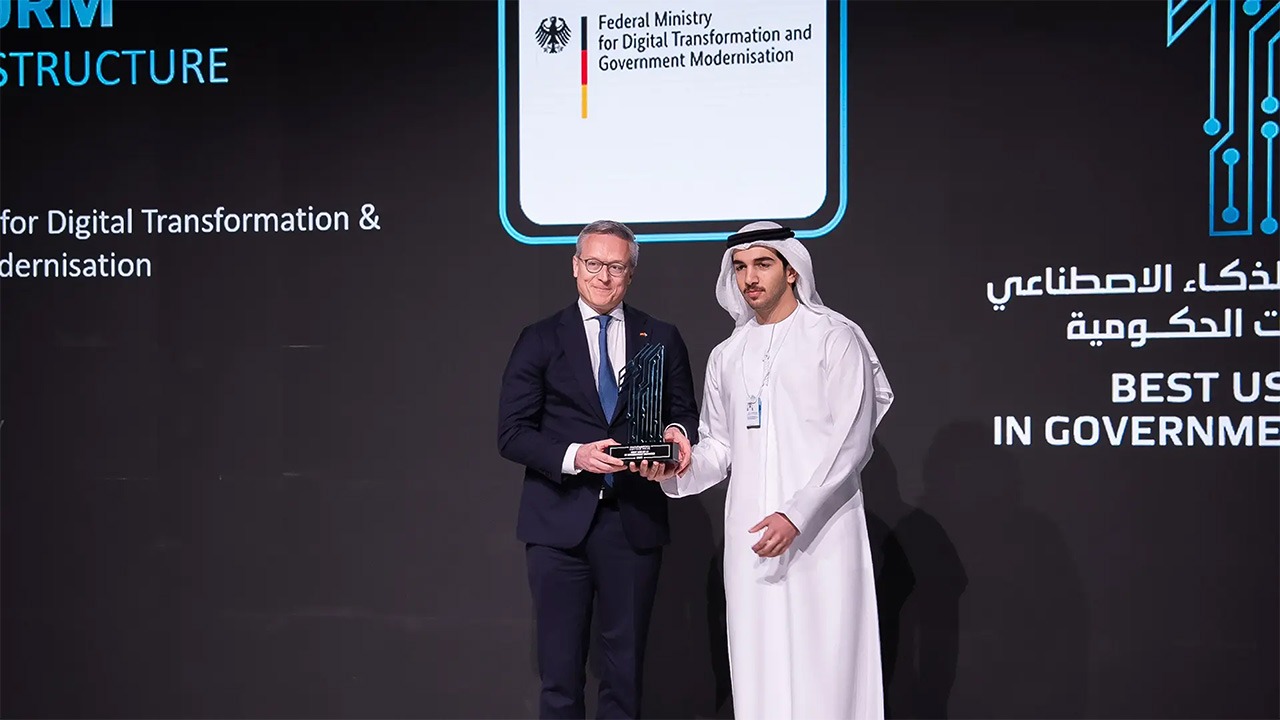
This victory is more than just a trophy for the display case. It marks a turning point. People often complain about the slow pace of digitalisation in Germany, about the cliché of fax machines and sluggish government agencies. Here, we are proving the opposite on the international stage. The award sends a clear signal: Germany is no longer in "catch-up" mode. We are taking the global lead in the field of agentic AI.
Agentic AI with real impact: More than just chatting
Why all the international hype? Because the project addresses a massive structural problem in the German economy.
Lengthy planning and approval procedures have been slowing down Germany as a business location for years. Whether it's the new hydrogen core network, the expansion of the highway infrastructure, or the modernization of the rail network, projects often get stuck for years. The shortage of skilled workers in public authorities is compounded by ever-increasing complexity, growing bureaucracy, overregulation, and a multitude of stakeholders – from residents and NGOs to public interest groups.
The innovation: rethinking processes instead of horizontal AI
Currently, everyone—from startups to government agencies—is working to generate added value using standard LLM solutions (such as ChatGPT) or simple internal chatbots. This is an important first step, but the impact on effectiveness or the bottom line is difficult to measure, and adoption is often mixed. The reason: horizontal AI often only creates marginal efficiency gains in text creation, but does not solve complex technical problems and core processes.
The federal government has taken a bold step in a positive sense. Instead of building another "chat AI," it put out a call for proposals for an end-to-end agentic AI solution and developed it with various (competing) consortia. We, together with our partner PWC, are part of one of these consortia. Our solution completely rethinks work processes. The AI does not function as a writing assistant, but as an intelligent agent that...
- reads and understands hundreds of pages of application documents and technical drawings,
- can perform plausibility checks and recognizes which documents and information need to be submitted later,
- validates completeness and legal compliance and prepares the necessary information for legal decisions,
... so that in the future, administrators and lawyers will be able to review infrastructure projects much more quickly.
The federal government has recognized the potential of this technology. Federal Digital Minister Dr. Karsten Wildberger sees it as his mission to "[...] automate thousands of outdated specialized procedures in public administration." What is currently being implemented for planning approval procedures is the blueprint for almost every complex application procedure offered by the state.
Experience the solution in the showroom
It's one thing to read about prices and political visions, it's another to understand what buzzwords like "process acceleration" and "agentic workflow" actually mean. Why are international juries and politicians so enthusiastic about it?
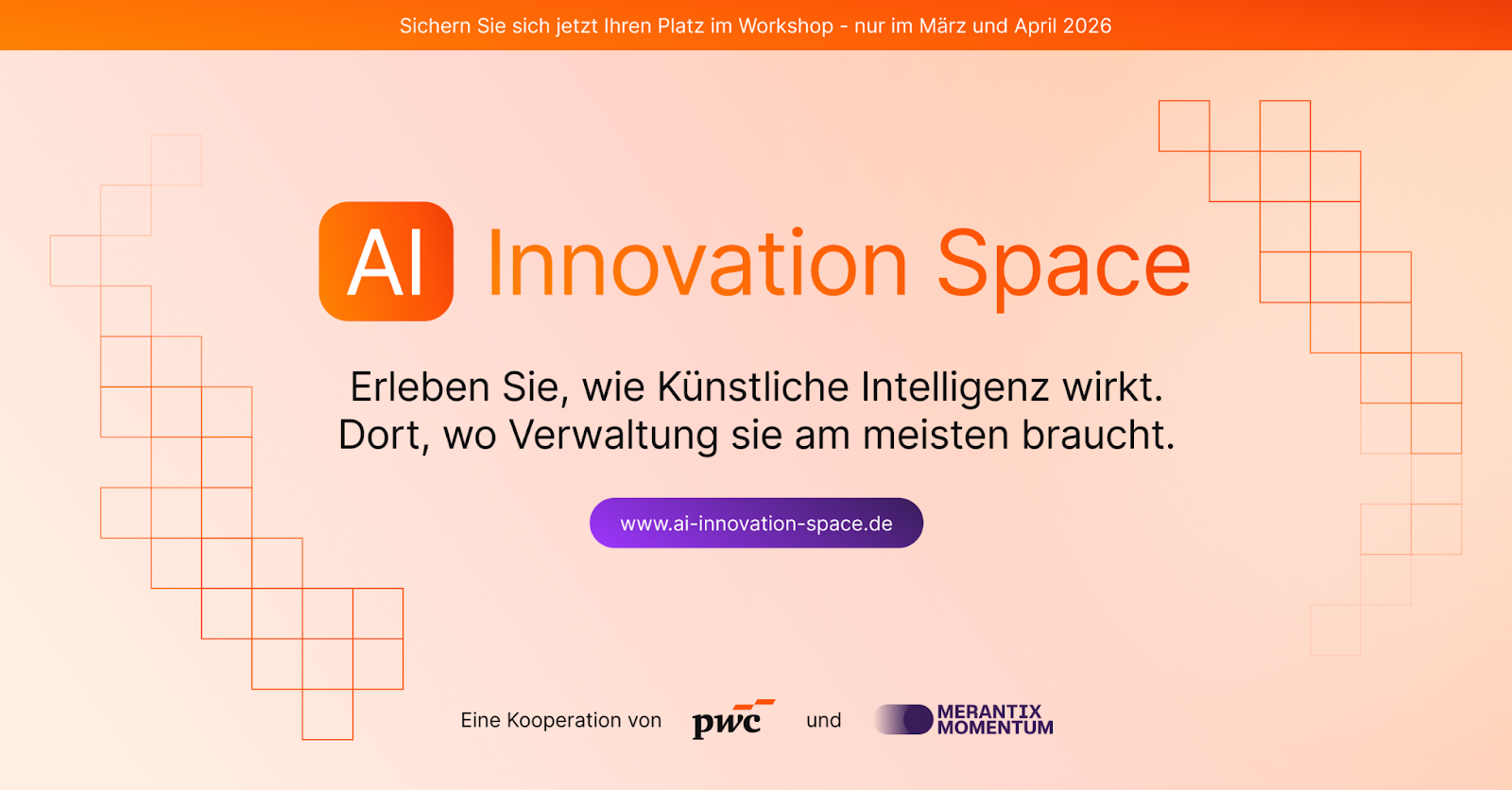
We cordially invite you to visit our new AI Innovation Space in Berlin – a pop-up experience where we will give you an interactive glimpse into the future of administrative work! All decision-makers and process experts from federal, state, and local governments are invited.
In our showroom, we not only show you the results, but can also work out how this new level of automation can ease the burden on your institution.
Click here for more information and to book an appointment at the AI Innovation Space.
https://www.ai-innovation-space.de/
Subscribe to the Merantix Momentum Newsletter now.
More articles
.png)

.png)
Germany wins gold for administrative AI
While the eyes of the world are currently focused on the Winter Olympics in Milan, Germany has won gold in a completely different discipline. And in a place where no one would have expected it: digital administration.
The BMDS project aiming to speed up processes was awarded the prestigious prize in the "Best Use of AI in Government Services" category at the World Government Summit.
This victory is more than just a trophy for the display case. It marks a turning point. People often complain about the slow pace of digitalisation in Germany, about the cliché of fax machines and sluggish government agencies. Here, we are proving the opposite on the international stage. The award sends a clear signal: Germany is no longer in "catch-up" mode. We are taking the global lead in the field of agentic AI.
Agentic AI with real impact: More than just chatting
Why all the international hype? Because the project addresses a massive structural problem in the German economy.
Lengthy planning and approval procedures have been slowing down Germany as a business location for years. Whether it's the new hydrogen core network, the expansion of the highway infrastructure, or the modernization of the rail network, projects often get stuck for years. The shortage of skilled workers in public authorities is compounded by ever-increasing complexity, growing bureaucracy, overregulation, and a multitude of stakeholders – from residents and NGOs to public interest groups.
The innovation: rethinking processes instead of horizontal AI
Currently, everyone—from startups to government agencies—is working to generate added value using standard LLM solutions (such as ChatGPT) or simple internal chatbots. This is an important first step, but the impact on effectiveness or the bottom line is difficult to measure, and adoption is often mixed. The reason: horizontal AI often only creates marginal efficiency gains in text creation, but does not solve complex technical problems and core processes.
The federal government has taken a bold step in a positive sense. Instead of building another "chat AI," it put out a call for proposals for an end-to-end agentic AI solution and developed it with various (competing) consortia. We, together with our partner PWC, are part of one of these consortia. Our solution completely rethinks work processes. The AI does not function as a writing assistant, but as an intelligent agent that...
- reads and understands hundreds of pages of application documents and technical drawings,
- can perform plausibility checks and recognizes which documents and information need to be submitted later,
- validates completeness and legal compliance and prepares the necessary information for legal decisions,
... so that in the future, administrators and lawyers will be able to review infrastructure projects much more quickly.
The federal government has recognized the potential of this technology. Federal Digital Minister Dr. Karsten Wildberger sees it as his mission to "[...] automate thousands of outdated specialized procedures in public administration." What is currently being implemented for planning approval procedures is the blueprint for almost every complex application procedure offered by the state.
Experience the solution in the showroom
It's one thing to read about prices and political visions, it's another to understand what buzzwords like "process acceleration" and "agentic workflow" actually mean. Why are international juries and politicians so enthusiastic about it?
We cordially invite you to visit our new AI Innovation Space in Berlin – a pop-up experience where we will give you an interactive glimpse into the future of administrative work! All decision-makers and process experts from federal, state, and local governments are invited.
In our showroom, we not only show you the results, but can also work out how this new level of automation can ease the burden on your institution.
Click here for more information and to book an appointment at the AI Innovation Space.
https://www.ai-innovation-space.de/


.png)