AI research
● for the solutions of the future
We apply transformative AI research to real-world challenges, collaborating closely with partners from academia, business, and industry.
Our mission
In our research team, we combine an academic spirit of research with a passion for tangible results.
We are convinced that in a field as dynamic as machine learning, the key to success lies in driving forward cutting-edge research ourselves in order to transfer it to application as quickly as possible. To achieve this, we create a research environment that is characterized by trust and creative freedom. This freedom gives our top-class researchers the opportunity to delve deeply into challenging issues, push the boundaries of knowledge and develop new methods. We share our findings with the research community through publications at the most important international conferences and at the same time translate them into innovative, practical solutions for our company and our customers.

THE TEAM

Dr. Stefan Dietzel
Dr. Stefan Dietzel heads the research team. Influenced by his academic career at the University of Ulm, the University of Twente, and Humboldt University in Berlin, he pursues a vision of combining the best of two worlds: the creative spirit of research with the collaborative, impact-oriented approach of industry.
Learn more
Head of Research

Dr. Martin Genzel
Dr. Martin Genzel is an applied mathematician and joins the research team as a Staff Machine Learning Researcher. After working at TU Berlin, Utrecht University, and Helmholtz Center Berlin, his research now focuses on the efficiency and compression of large AI models, especially large language models. His goal is to transform sound mathematical concepts into resource-efficient and scalable AI solutions.
Learn more
Staff Machine Learning Researcher

Dr. Sebastian Schulze
Dr. Sebastian Schulze (DPhil) earned his doctorate at the University of Oxford in the field of probabilistic methods and reinforcement learning. He is currently conducting research as a senior machine learning researcher at Merantix Momentum on topics related to the efficient training and verification of complex process models (digital twins).
Learn more
Senior ML Researcher

Dr. Patrick Putzky
Dr. Patrick Putzky is a machine learning researcher at Merantix Momentum, where he conducts research on model compression methods and efficient inference on limited hardware. He earned his doctorate under Max Welling at the University of Amsterdam, specializing in deep learning and inverse problems. He successfully prevailed against international competition as the winner of the prestigious fastMRI Challenge (FAIR & NYU).
Learn more
Senior ML Researcher
Dr. Mattes Mollenhauer
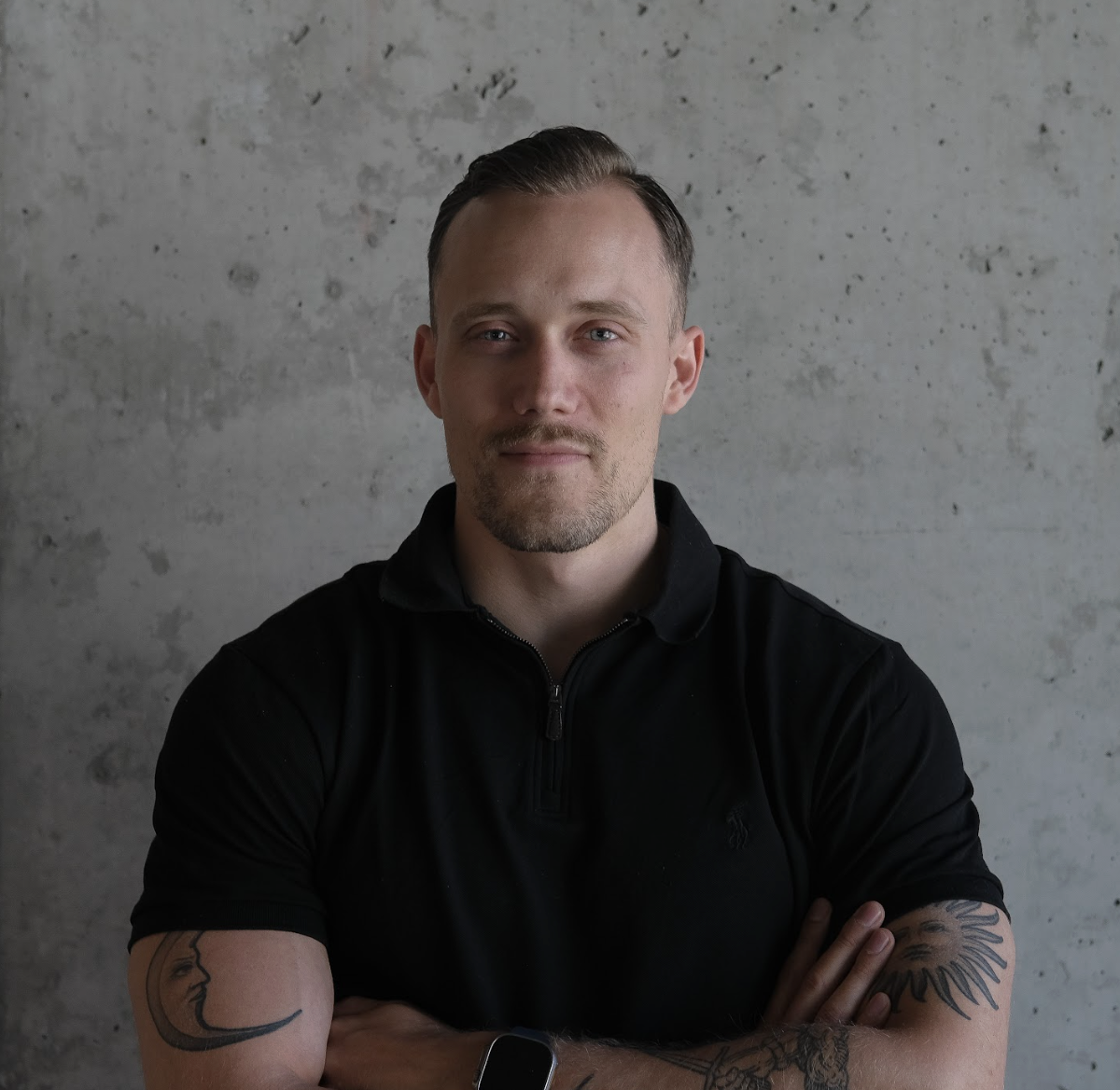
Dr. Mattes Mollenhauer earned his doctorate in mathematics at Freie Universität Berlin and conducted research as a postdoctoral fellow. Among other things, he studies the efficiency of machine learning models for complex systems in biochemical and physical applications.
Learn more
Senior ML Researcher
Our current research focuses

Model compression & efficient inference
Deploying large foundation models is challenging in resource-constrained or on-premise environments due to their size and inference costs. We have developed methods that determine compression performance trade-offs without the need for recalculation. Our current focus is on a novel, data-free compression approach that delivers good results on any commercially available model.
Generative process modeling & hypothesis testing
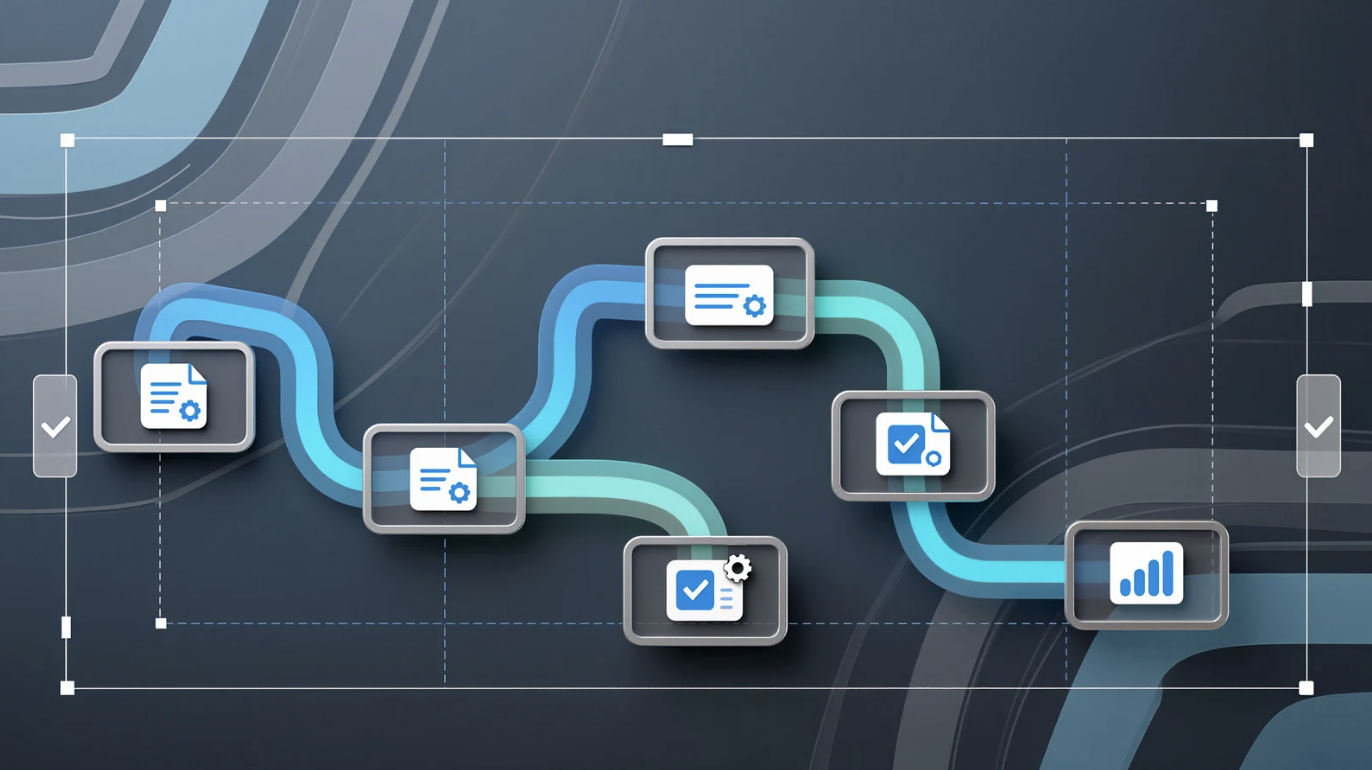
Our goal is to enable reliable decisions in complex systems where uncertainty plays a major role. We are developing a toolset for creating powerful digital twins based on neural generative models and ensuring their accuracy using sound statistical methods. Such approaches enable downstream applications ranging from hypothesis testing and causal analysis to anomaly detection and forecasting to scenario planning and optimization.
Our latest publications

Choose Your Model Size: Any Compression of Large Language Models Without Re-Computation (2025)
Martin Genzel, Patrick Putzky, Pengfei Zhao, Sebastian Schulze, Mattes Mollenhauer, Robert Seidel, Stefan Dietzel, Thomas Wollmann
.png)
Regularized least squares learning with heavy-tailed noise is minimax optimal (2025)
Mattes Mollenhauer, Nicole Mücke, Dimitri Meunier, Arthur Gretton
.png)
Can automatic rodent behavior analysis using AI/ML contribute to drug safety? Initial insights from DeepRod (2025)
B. Weiss, K. Eschmann, C. Weinandi, P. Schwarz, F.-Z. Khamlichi, H. Behnke, M. Garafolj, O. Akhtar, A. Loy, H. Schauerte, T. Wollmann, G. Rast
.png)
Compressing Large Language Models to Any Size Without Re-Computation (2025)
Martin Genzel, Patrick Putzky, Pengfei Zhao, Sebastian Schulze, Mattes Mollenhauer, Robert Seidel, Stefan Dietzel, Thomas Wollmann
.png)
Deep Joint Source-Channel Coding for Small Satellite Applications (2025)
Olga Kondrateva, Grace Li Zhang, Julian Zobel, Björn Scheuermann, Stefan Dietzel
Research cooperations
Innovation is created by pooling expertise.
This is why we forge strong alliances with leading universities, research institutions and companies from technology and industry.
In publicly funded research projects, we jointly transfer the latest findings into practical applications. We contribute our many years of experience in acquiring and managing national (e.g. BMFTR, BMWE) and European (e.g. Horizon Europe) collaborative projects.
The exchange with the research community is just as important to us, which is why we regularly publish our results, also in cooperation with external chairs and research institutions.
In publicly funded research projects, we jointly transfer the latest findings into practical applications. We contribute our many years of experience in acquiring and managing national (e.g. BMFTR, BMWE) and European (e.g. Horizon Europe) collaborative projects.
The exchange with the research community is just as important to us, which is why we regularly publish our results, also in cooperation with external chairs and research institutions.



Publications
Thank you! Your submission has been received!
Oops! Something went wrong while submitting the form.
SECREDAS: Safe and (Cyber-)Secure Cooperative and Automated Mobility (2023)
Sebastian Gerres
IFAC 2023 - Full PDF at arxiv.org
Uncovering the Inner Workings of STEGO for Safe Unsupervised Semantic Segmentation (2023).
Alexander Koenig, Maximilian Schambach, Johannes S. Otterbach
CVPR 2023 - Full PDF at arxiv.org
Interpretable Reinforcement Learning via Neural Additive Models for Inventory Management (2023).
Julien Siems, Maximilian Schambach, Sebastian Schulze, Johannes S. Otterbach
ICLR 2023 - Full PDF at arxiv.org
Auto-Compressing Subset Pruning for Semantic Image Segmentation (2022)
Konstantin Ditschuneit, Johannes S. Otterbach
GCPR 2022 - Full PDF at arxiv.org
Towards Learning Self-Organized Criticality of Rydberg Atoms using Graph Neural Networks (2022).
Simon Ohler, Daniel Steven Brady, Winfried Lötzsch, Michael Fleischhauer, Johannes Otterbach
AI4Science Workshop at ICML 2022 - Full PDF at arxiv.org
Scalable Flow Optimization for Small Satellite Networks using Benders Decomposition (2022).
Olga Kondrateva, Stefan Dietzel, Björn Scheuermann
IEEE WoWMoM 2022 - Full PDF at ieee.org
Learning the Solution Operator of Boundary Value Problems using Graph Neural Networks (2022).
Winfried Lötzsch, Simon Ohler, Johannes S. Otterbach
ICML 2022 - Full PDF at arxiv.org
Chameleon: A Semi-AutoML framework targeting quick and scalable development and deployment of production-ready ML systems for SMEs (2021)
Johannes Otterbach, Thomas Wollmann
Full PDF at arxiv.org
DAAIN: Detection of Anomalous and Adversarial Input using Normalizing Flows (2021).
Samuel von Baußnern, Johannes Otterbach, Adrian Loy, Mathieu Salzmann, Thomas Wollmann
Full PDF at arxiv.org
MEAL: Manifold Embedding-based Active Learning (2021).
Deepthi Sreenivasaiah, Johannes Otterbach, Thomas Wollmann
CPVR 2021 - Full PDF at arxiv.org
Our research is funded by


Would you like to develop a project proposal with us or publish it together? Please contact us.
Get in touch with us
- Focus on efficient inference of foundation models and generative process modeling
- Rapid transfer of scientific breakthroughs into scalable, resource-efficient solutions
- Verifiable decision support in complex systems
- Long-standing, trusting cooperation in public and private research consortia
Subscribe to the Merantix Momentum Newsletter now.
Thank you! Your submission has been received!
Oops! Something went wrong while submitting the form.